How B2B publishers can make the LinkedIn algorithm work for them (Part 1)
LinkedIn is a key distribution channel for B2B publishers — but only if you understand what the algorithm rewards. A breakdown of the post formats ranked from highest to lowest reach, plus the link-in-comments tactic that still works.
With more than a billion profiles, LinkedIn has become an essential distribution channel for many B2B publishers. It gives you access to a large part of your professional target audience, allows you to tag people and organizations easily, and benefits from strong network effects.
But how do you use LinkedIn in a way that both increases the visibility of your media brand and drives traffic to your website? In this article, I'll explain which types of content perform best within the LinkedIn algorithm — and how B2B publishers can use that knowledge strategically.
Why LinkedIn favors native content
LinkedIn wants users to spend as much time as possible on the platform. The longer people stay active on LinkedIn, the more ads they see — and the more revenue LinkedIn generates.
That's why the algorithm prioritizes native content: content users can consume without leaving LinkedIn. Below is an overview of the post formats that generally perform best, ranked from highest to lowest reach potential.
1. Document or carousel posts
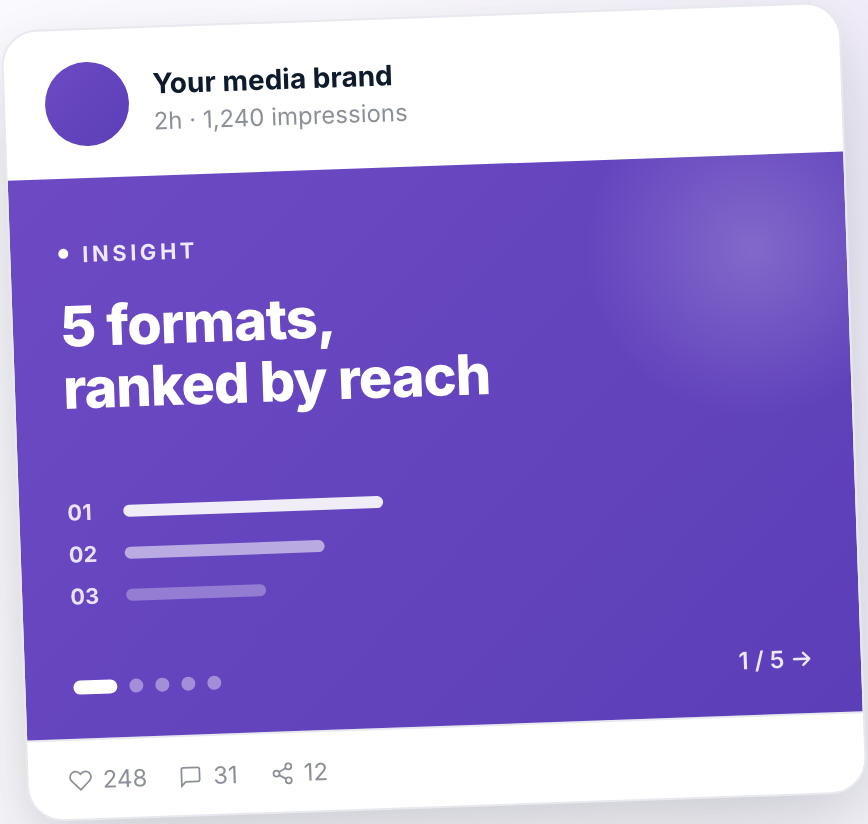
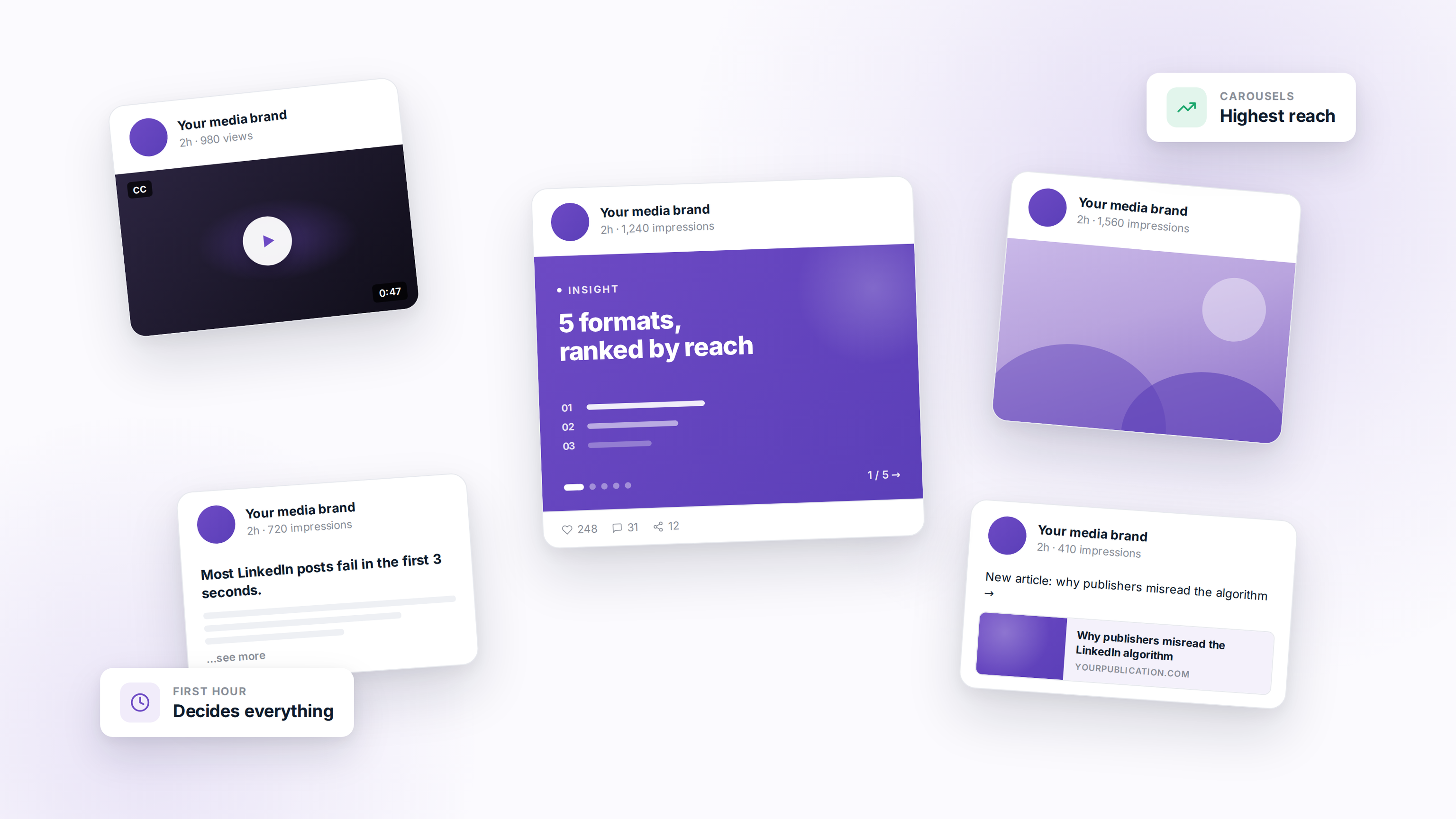
Carousel posts currently perform exceptionally well on LinkedIn. Users tend to spend more time swiping through slides, and that's exactly the kind of behavior the algorithm rewards.
Carousels also offer several additional advantages:
- they take up a lot of space in the feed;
- immediately attract attention;
- provide room for branding and visual identity;
- and allow you to summarize your article in a visually engaging way.
For B2B publishers, carousel posts are often one of the most effective formats available.
2. Native video
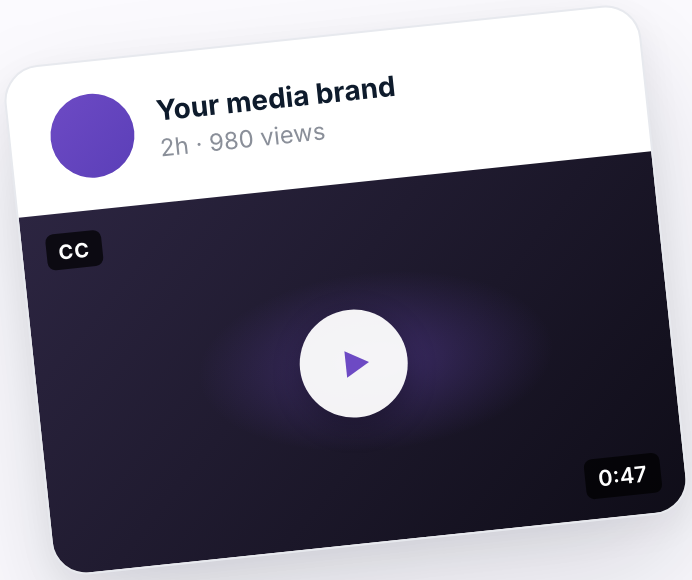
In second place is native video — videos uploaded directly to LinkedIn rather than shared through YouTube links. The ideal length is typically between 30 and 90 seconds. Always include subtitles so the content can also be consumed without sound.
For publishers, video works especially well when the original content already exists in video format. An effective strategy is to:
- publish a short clip on LinkedIn;
- and direct users to your website for the full version.
This allows you to benefit from LinkedIn's reach while still generating traffic to your own platform.
3. Image + strong copy
A strong combination of visuals and text continues to perform consistently well. Whenever possible, use authentic images instead of stock photography or overly obvious AI-generated visuals. In general, the more genuine the image feels, the higher the engagement tends to be.
This type of post also gives you plenty of room for brand recognition through:
- your own typography;
- consistent colors;
- a recognizable visual style;
- and subtle logos or branding elements.
4. Text-only posts
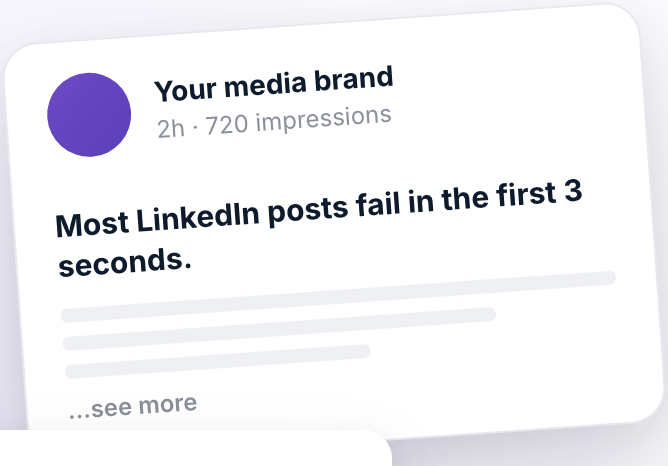
Posts without visuals generally perform less well than visual content, but they can still generate significant reach when the copy is strong enough. Sharp opinions, recognizable insights, or compelling opening lines often work particularly well in text-only posts.
Still, in most cases, adding a relevant visual remains the better option.
5. Posts with external links
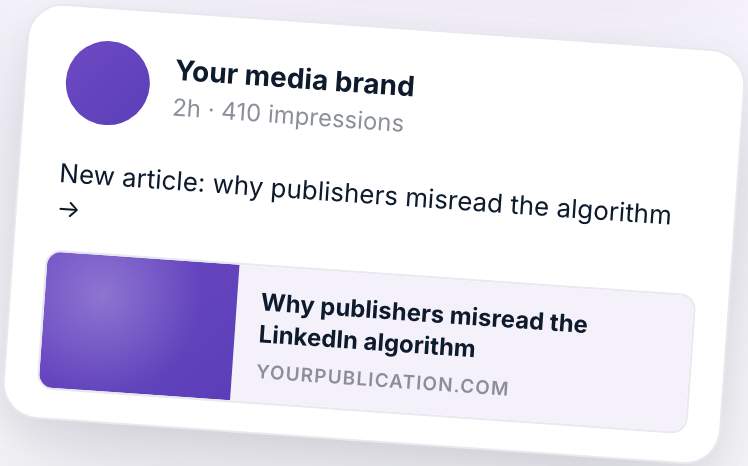
Posts containing external links generally perform the worst on LinkedIn. When you link directly to a website, LinkedIn automatically generates a preview with a thumbnail and title. While functional, LinkedIn has less incentive to distribute these posts broadly because they encourage users to leave the platform.
A smart workaround: put the link in the first comment
Want to maximize reach while still driving traffic to your website? Many publishers use a well-known tactic: don't place the link in the post itself — put it in the first comment instead.
In the original post, simply refer readers to "the link in the comments." In practice, this often results in better organic reach while still allowing you to generate clicks to your article. It's not a guaranteed growth hack, but many accounts see stronger performance this way than with direct link posts.
General tips for better reach
Whatever format you choose, the first hour after publishing is often critical. During that period, LinkedIn closely monitors signals such as:
- watch time;
- likes;
- comments;
- shares;
- and how long people stop scrolling to engage with your post.
That's why it's important to focus on:
- a strong opening line;
- a clear visual hook;
- and content that encourages interaction.
A strong text post can sometimes outperform an average video or carousel simply because engagement signals are stronger.
Conclusion
For B2B publishers, LinkedIn is much more than a distribution channel. It's a platform where brand building, reach, and traffic generation come together — if you understand how the algorithm works.
The key takeaway: the better your content aligns with the behavior LinkedIn wants to encourage, the greater your organic visibility will become.