What being a “preferred source” in Google really does for publishers
The “Add as a preferred source on Google” button is popping up everywhere — but what does it actually do? A breakdown of the Google surfaces it touches, why it won't lift your organic rankings, and where it fits in your audience strategy.
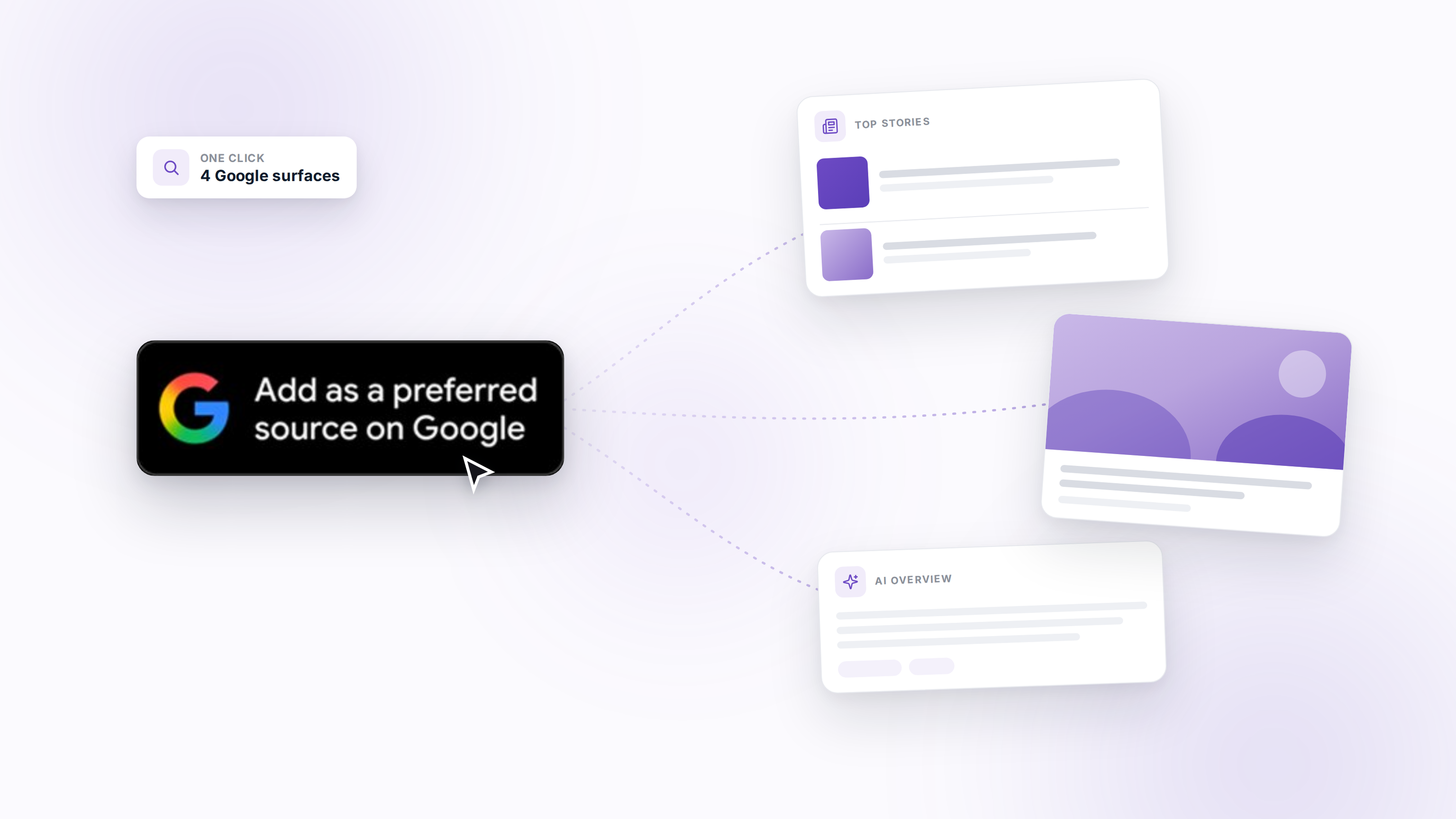
In recent times, you'll see them appearing on more and more media websites: the "Add as a preferred source on Google" button. When you click it, you're taken to a page where the URL of the media outlet is already filled in. With a single click, you can then add that source as a preferred source.
But what actually happens after that?
No impact on organic rankings
First of all, it does not improve your media brand or website's position in organic search results. Not at an individual level, and not structurally across the board.
But what does it do?
Top Stories
Adding a site as a preferred source increases the likelihood that it will appear in Top Stories. This is the news module that shows up at the top of Google search results for news-related or trending queries.
From your sources
When you've added one or more sources, an additional section called "From your sources" may appear below Top Stories in relevant news or topical searches. This section highlights the sources you've personally selected.
Google Discover
Google Discover can be seen as the modern front page of a newspaper. It is a feed of news articles and content curated based on your interests and search behavior.
Discover is available:
- in the Google app on Android and iOS
- on the home screen of many Android devices
It is a major driver of mobile traffic to websites and, in some cases, can generate significant referral traffic.
AI modules
Google is actively experimenting with AI-powered modules, the most prominent being AI Overviews. Adding a media outlet as a preferred source does not guarantee citation in these results, but it may influence how content is prioritized within them.
Adoption and usage
Since the feature is still relatively new, there are no solid figures yet on how often the button is used. Our estimate is that fewer than 1% of visitors click the button, and that slightly more than half of those users complete the process of adding a source.
Conclusion
This feature may give your content slightly more visibility and priority within certain Google surfaces, but you remain heavily dependent on Google's algorithm for reach.
It is therefore best seen as a useful optimization, not a game changer for traffic. Compared to something like newsletter subscriptions — which provide more direct and reliable audience access — this should not be your primary focus when building audience relationships.